
How Long Does Shower Waterproofing Last?
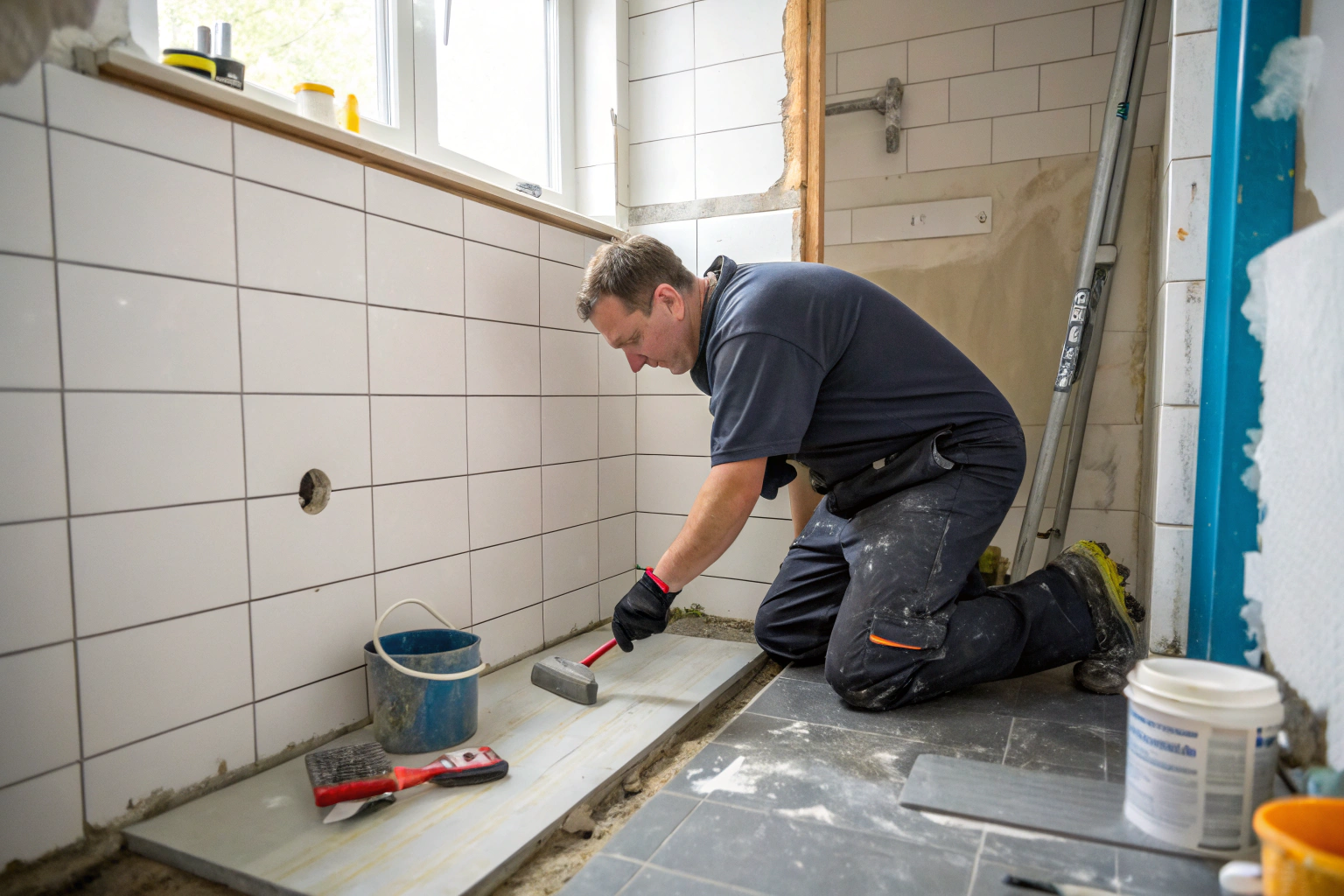
Shower waterproofing lasts anywhere from 10 to 25+ years, depending on three factors: the type of membrane used, the quality of installation, and how well the shower is maintained. Here’s what Newcastle homeowners need to know:
- Liquid-applied membranes: 10–15 years under normal shower use
- Sheet membranes: 20–25+ years when correctly installed
- Industry standard warranty: Typically 10 years, though quality products and professional installation regularly exceed this
- Coastal environments (Newcastle): Salt air and humidity can accelerate deterioration in poorly installed systems — making professional installation even more critical locally
The single biggest factor in how long shower waterproofing lasts isn’t the product — it’s the installation. A premium membrane applied incorrectly will fail faster than a standard membrane installed with precision at every joint, corner, and penetration point.

Why Shower Waterproofing Is the Most Critical Wet Area Job
Every wet area in your home needs waterproofing — the laundry, the ensuite, and around the bath. But none of them come close to the sustained, direct water exposure that a shower recess handles every day.
A bath gets filled and drained. A laundry floor might get splashed. But a shower hits every surface with pressurised hot water, sometimes for 20 minutes at a stretch. That’s active pressure working against every weak point in the system, every single time someone showers.
What makes this the highest-stakes job is what happens when it fails. A small gap in a corner, a missed penetration point, a membrane not taken high enough up the wall — any one of those gives water a path. And in older Newcastle homes with timber frames, that damage compounds fast. What starts as a waterproofing failure becomes a structural repair.
The Critical Points Inside a Shower Recess
Most waterproofing failures don’t happen across a flat surface — they happen at specific points where materials meet, where fixtures penetrate, or where stress concentrates over time.
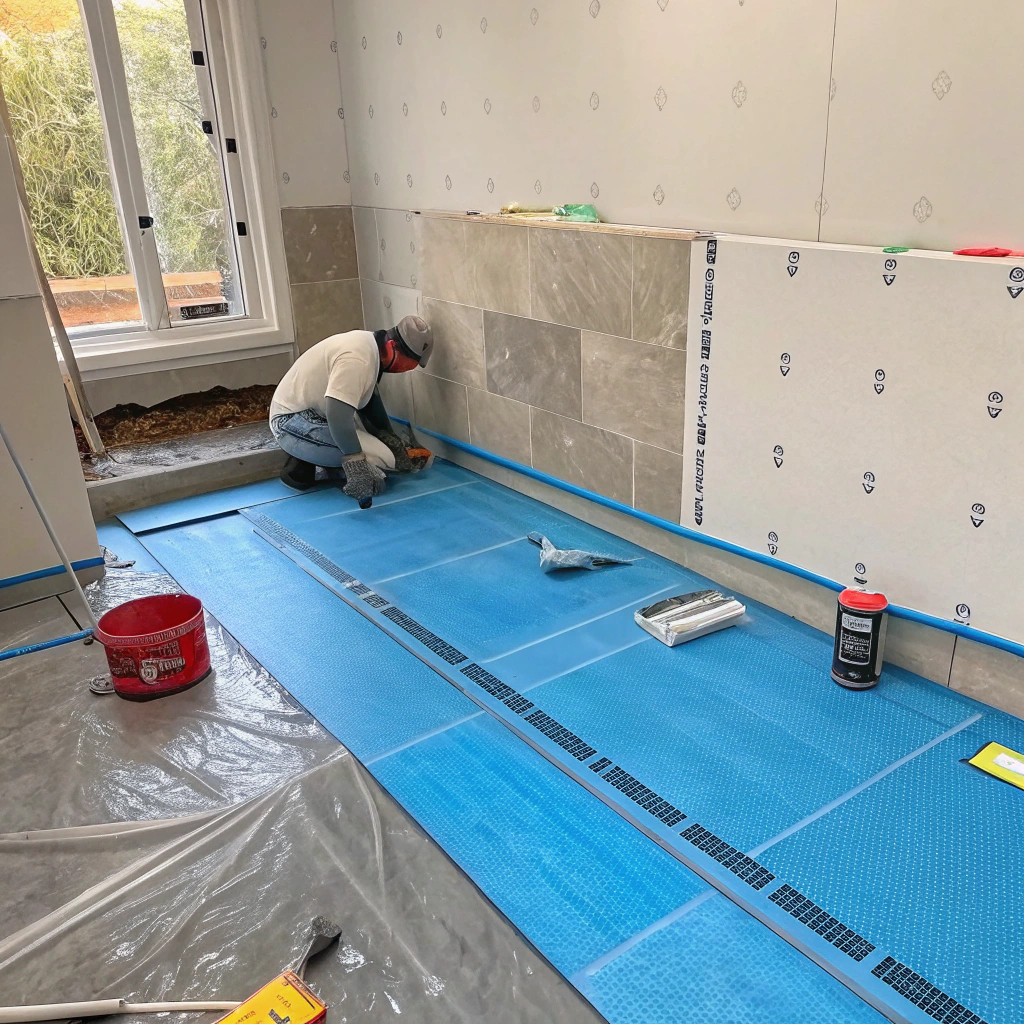
How Shower Waterproofing Is Done
Assessment: Before any product goes on, we assess what we’re working with. Substrate type, existing damage, and all the critical points that need specific attention. On an existing shower, we’re also looking for signs of prior failure that could affect the new membrane’s performance.
Surface Preparation: Waterproofing is only as good as what it’s bonded to. Surfaces need to be clean, structurally sound, and correctly primed. Any loose material or contamination gets removed. Gaps or voids are filled and allowed to cure. Corners are coved where required. Skipping or rushing this step is where a lot of failures start.
Membrane Application: We apply the membrane in accordance with manufacturer specifications and AS 3740 — the Australian Standard for waterproofing of domestic wet areas. That means the right number of coats, correct coverage rates, fabric reinforcement at all corners and joins, and correct upstand heights. Every penetration is sealed individually.
Cure, Inspection & Sign-Off: The membrane needs adequate cure time before tiling begins — full stop. Once cured, the job is inspected against the standard before we sign off. You get documentation confirming the waterproofing has been completed to AS 3740, which matters for insurance purposes and your peace of mind.
Waterproofing Membrane Options for Showers
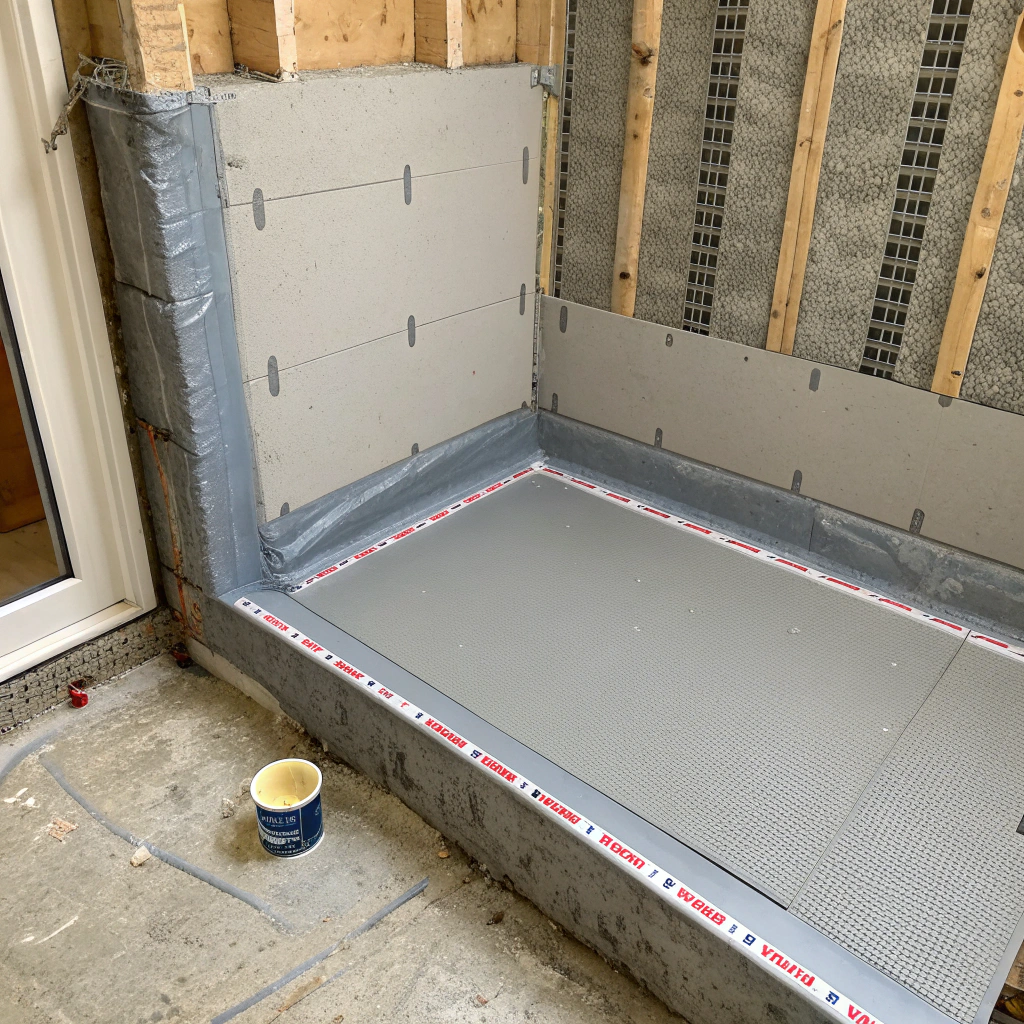
Not every shower needs the same membrane, and not every membrane suits every substrate or installation condition. The two main categories are liquid-applied and sheet membranes, and both have a place depending on the job.
Liquid-applied membranes are the most common in residential shower waterproofing. Applied by brush or roller, they handle complex shapes, corners, and penetrations well. Sheet membranes offer higher baseline durability and are often specified where maximum longevity is the priority.
What we don’t do is select a membrane based on what’s cheapest or most convenient. The right product depends on the substrate, the configuration, and what you need it to do over the long term. We’ll tell you what we’re using and why before we start.
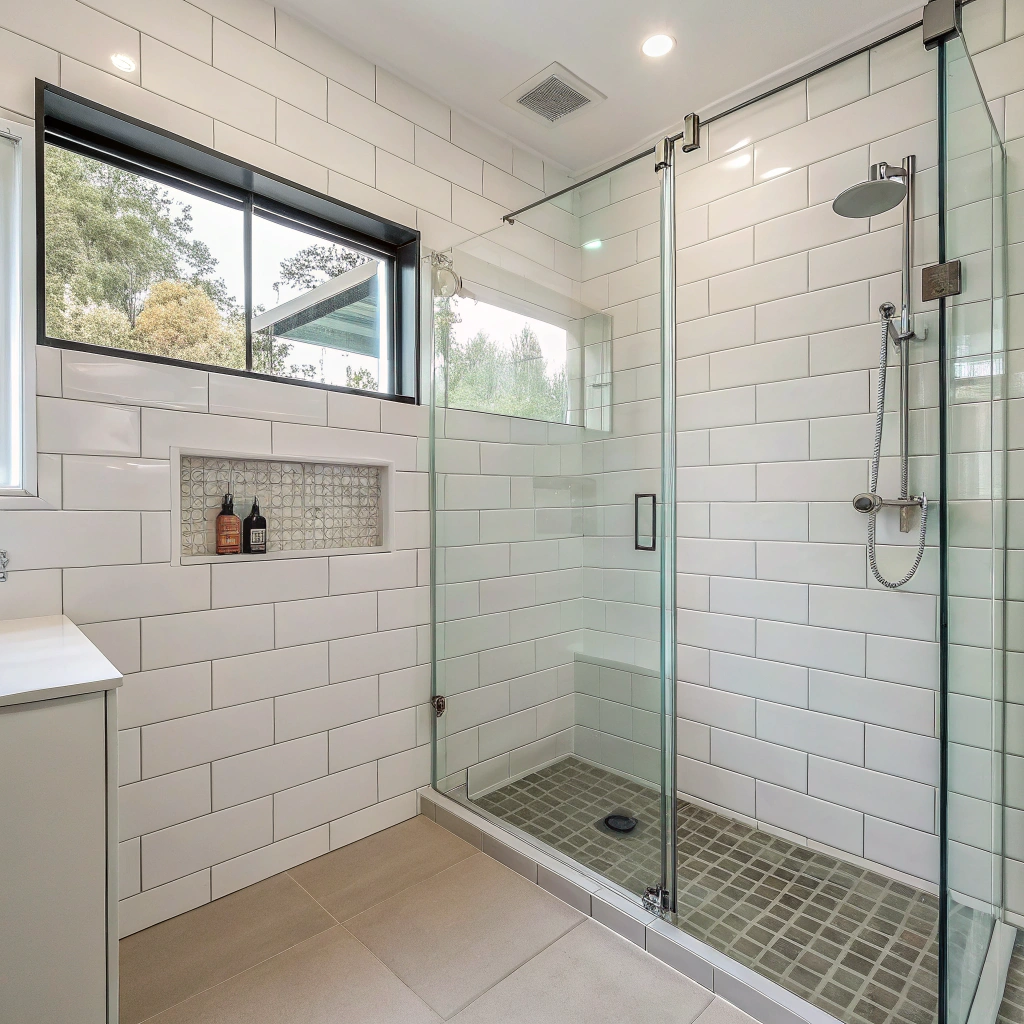
New Shower vs Existing Shower Waterproofing
The approach changes depending on whether we’re waterproofing a brand-new shower or dealing with an existing one that’s showing signs of trouble.
For a new shower, waterproofing happens at the right point in the construction sequence — after the substrate is fixed and prepared, before any tiling begins. We have a fresh substrate, no previous products to work around, and full access to every surface that needs treating. Done right the first time, a new shower should give you decades of trouble-free performance.
For an existing shower, the picture is more complex. If tiles are already in place, we can’t inspect or treat the membrane directly without strip-out. Our first job is to honestly assess whether you’re dealing with a surface issue — cracked grout, failed sealant — or a deeper membrane failure. We’ll tell you the truth, even if that means the shower needs to come out to be done properly.
Signs Your Shower Waterproofing Has Failed
The tricky thing about waterproofing failure is that by the time you see obvious signs, damage has usually been building for a while. Knowing what to look for early can save you significantly in repair costs.
Visual Signs
- Loose tiles, hollow-sounding when tapped, or starting to pop off the wall
- Grout that’s crumbling, cracking, or has dark staining that keeps coming back after cleaning
- Paint peeling or bubbling on walls adjacent to the shower
- Water staining on the ceilings below an upstairs shower
Odour Indicators
- Persistent musty smell that doesn’t clear with ventilation
- Mould smells even after cleaning, without visible mould on the surface
Structural Warning Signs
- Soft or spongy feeling underfoot near the shower
- Timber swelling or warping at the base of walls near the recess
- Skirting boards showing water staining or deterioration
Tile and Grout Movement
- Grout joints that are wider than they used to be — a sign that the substrate behind is moving
- Tiles that rock slightly when pressed — indicating bond failure
- Cracking at corners and joins that keep coming back after regrouting
Why Newcastle Homeowners Choose Bathroom Renovations Newcastle
There’s no shortage of trades in Newcastle, so we know you have options. What we can tell you is what we bring to every job.
Local experience matters here. Newcastle’s coastal climate — salt air, high humidity, older housing stock — means waterproofing failures progress faster than in inland areas. We’ve worked across Newcastle suburbs long enough to know what we’re dealing with across different construction eras and substrate types.
Every job we complete is done to AS 3740 with written documentation confirming compliance. We’re licensed, fully insured, and our Google Reviews reflect real clients from real Newcastle suburbs.
We don’t take shortcuts on waterproofing. Not on materials, not on application, not on cure time. In a shower recess, a shortcut today becomes a structural problem down the track.
Frequently Asked Questions
Costs vary depending on the size of the shower, the substrate condition, and whether strip-out is required. For a straightforward new shower waterproofing, prices typically start from $300–$500. We provide a clear, itemised quote before any work begins.
For a full membrane application, yes. Waterproofing needs to bond directly to the substrate — it can’t be applied over existing tiles and perform properly. If strip-out isn’t an option, we’ll tell you honestly what can and can’t be achieved.
Most liquid-applied membranes require a 24–48 hour cure time between coats, and a minimum of 24 hours after the final coat before tiling begins. We don’t rush this step.
Yes. Shower waterproofing in domestic wet areas is required to meet AS 3740 — the Australian Standard for wet area waterproofing. We complete and document every job to this standard.
In some cases, yes — but only where the existing membrane is sound and the substrate is stable. If there’s any doubt about the integrity of what’s already there, we recommend a full strip-out. Applying a new membrane over a failing one doesn’t fix the problem.
Regrouting addresses surface-level grout deterioration. If you’re seeing tiles moving, persistent mould, or damp outside the recess, that points to a membrane issue — not a grout issue. We assess this during our free inspection and give you a straight answer.
Book Your Free Shower Assessment Today
No obligation. We inspect your shower recess and give you an honest assessment of what’s needed — nothing more.
How it works:
- Contact us for a free assessment
- We inspect your shower recess and advise honestly on what’s needed
- You receive a clear, itemised quote — no hidden costs
- Work completed to AS 3740 with full written sign-off
📞 0240036435
📍 Newcastle CBD | Hamilton | Merewether | Cooks Hill | The Junction | Adamstown | Charlestown | Kotara | New Lambton
Find a Local Bathroom Renovations Company in Newcastle
