
What Causes Tiled Floors to Crack or Lift?
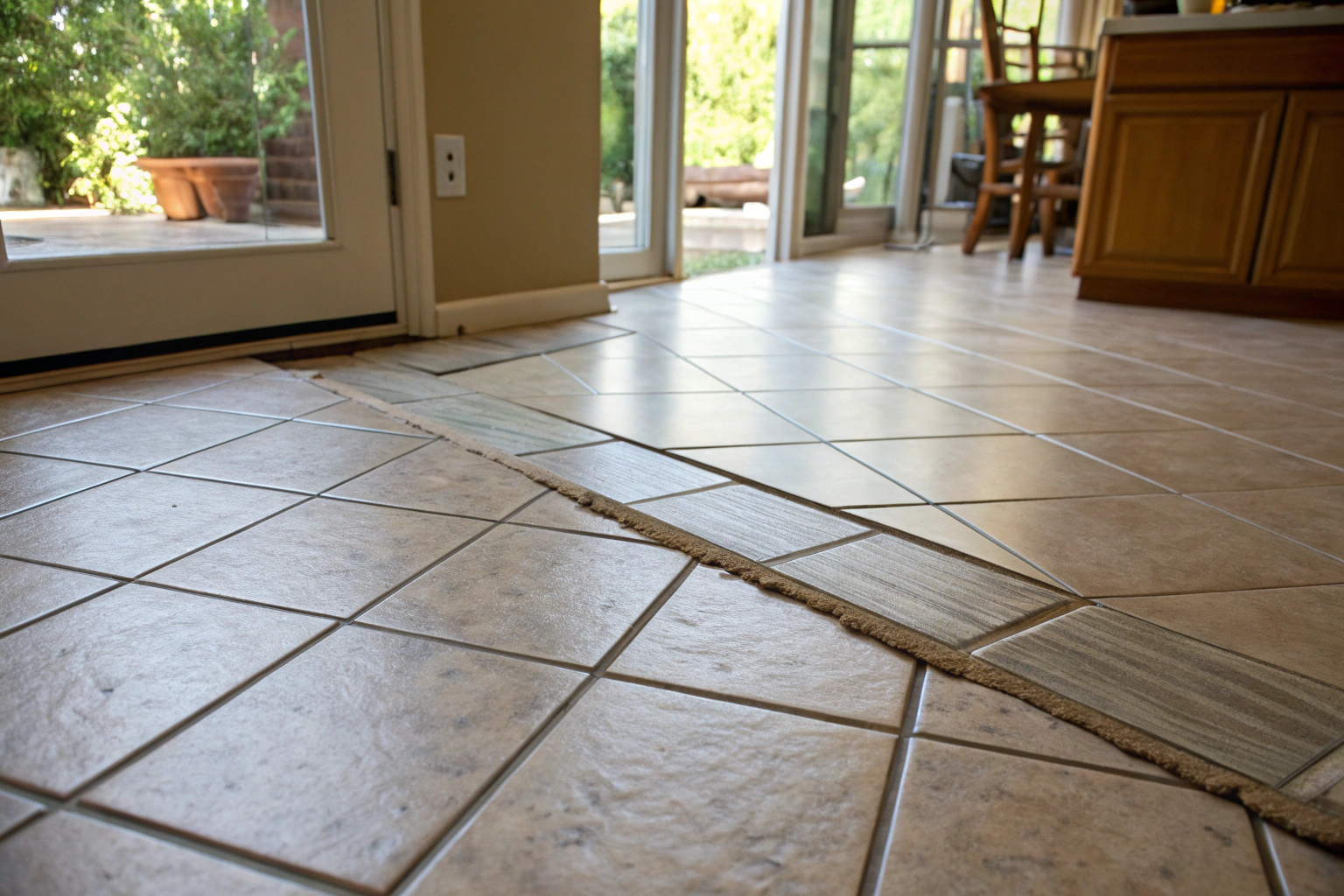
Tiled floors crack or lift when something goes wrong beneath the surface — with the substrate, the adhesive, the installation, or moisture getting in where it shouldn’t. In Newcastle homes, coastal humidity and older subfloors make these problems more common than in other areas.
The most common causes include:
- Substrate movement — Shifting or flexible subfloors put stress on tiles above, causing cracking or loss of adhesion
- Failed adhesive — Poor coverage during installation creates hollow spots where tiles are no longer properly bonded
- No expansion joints — Without gaps to allow for natural movement, tiles push against each other and crack or tent
- Moisture damage — Water penetrating beneath tiles breaks down the adhesive bond, causing tiles to lift
- Uneven subfloor — An improperly prepared surface creates uneven pressure and cracking over time
- Heavy impact — Direct force from dropped objects can crack tiles regardless of how well they were laid
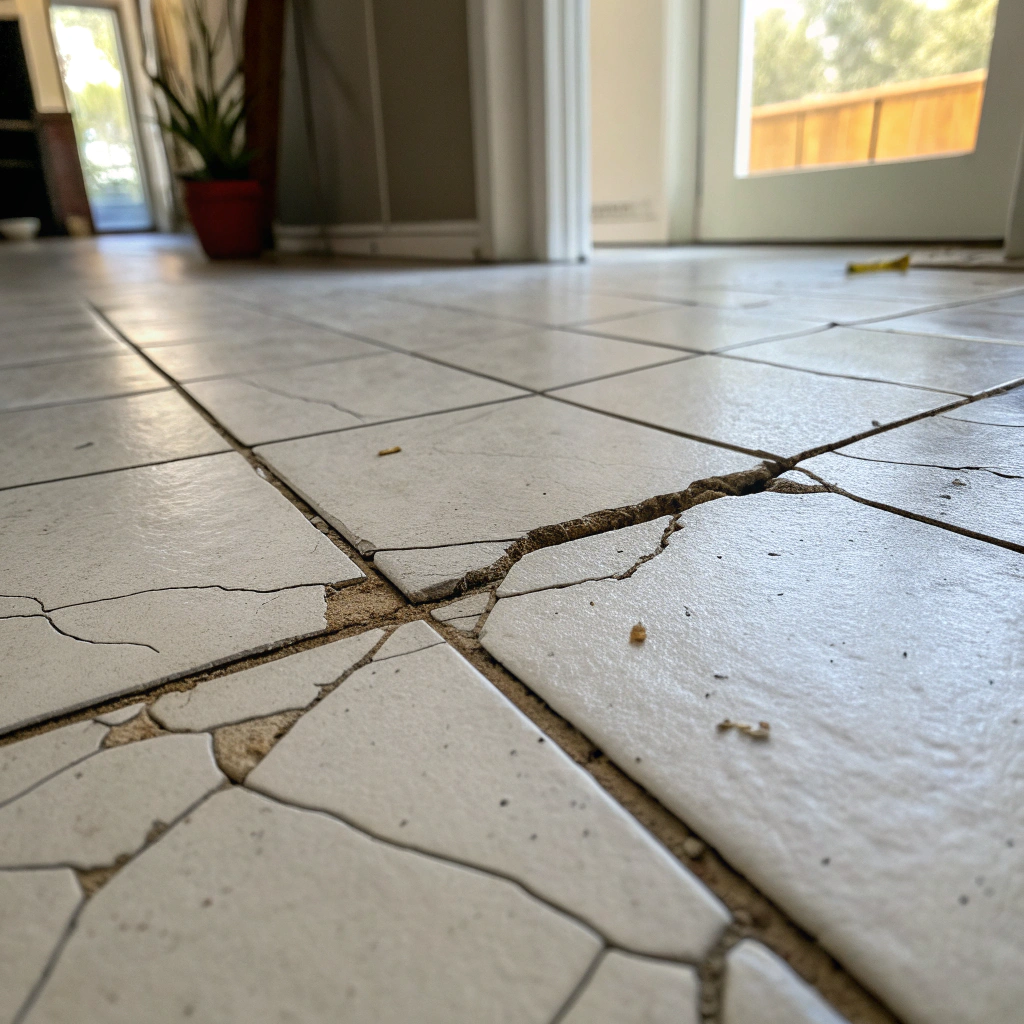
Key warning signs to watch for: a hollow or “drummy” sound when the tile is tapped, spiderweb cracks radiating out from a single point, or tiles visibly lifting at the edges.
Understanding what’s causing the problem is what separates a repair that lasts from one that fails again in six months — which brings us to the specific problems we see and fix most often.

Common Tiled Floor Problems We Fix
Most tiled floor damage falls into a handful of categories. Knowing which one you’re dealing with shapes how we approach the repair.
Repair vs Replacement — What's the Right Call
This is the question most Newcastle homeowners want answered before anything else — and it’s one we give an honest answer to, every time.
When a Repair Is the Right Answer: If the damage is localised — a few cracked tiles, a section of failed grout, a handful of hollow spots — repair is almost always the better option. It’s less disruptive, less expensive, and when done properly, just as durable as a full replacement.
When Replacement Makes More Sense: When damage is widespread, when the substrate has failed across a large area, or when the original installation was so poorly done that isolated repairs won’t hold, replacement becomes the more practical path. We’ll tell you when that’s the case — straight, without overselling either option.
How We Assess Your Floor Honestly: We come out, tap the floor, look at the pattern of damage, check the substrate condition, and give you a clear picture of what’s going on. No guesswork, no worst-case-scenario upselling.
Linking to Deeper Substrate Issues: Sometimes a failing tiled floor is a symptom of a broader substrate or moisture problem that needs to be addressed first. Where that’s the case, we’ll flag it and point you in the right direction before any repair work starts.
Once we know what the floor actually needs, the repair process itself is straightforward — and that’s exactly what we walk through next.
How We Repair Tiled Floors
Every repair job follows the same basic process — assess first, fix the actual problem, then restore the surface properly. Here’s how that looks in practice.
Assessment and Diagnosis: We start by tapping across the floor to map hollow spots, checking grout lines for failure patterns, and looking at the substrate condition where we can access it. That assessment shapes everything that follows.
Removing Damaged Tiles Safely: Damaged tiles are removed carefully to avoid cracking surrounding tiles or disturbing the substrate further. In older Newcastle homes where tiles can be brittle or bedded in thick mortar, this step requires patience and the right tools.
Addressing Underlying Issues: Before anything goes back down, we fix what caused the problem — whether that’s re-levelling the substrate, improving adhesive coverage, adding expansion joints, or addressing moisture entry points.
Reinstalling, Grouting and Final Inspection: Replacement tiles are bonded with the correct adhesive for the substrate type, grouted to match the existing floor as closely as possible, and inspected once cured to confirm the repair is solid and sitting flush with the surrounding tiles.
Matching Tiles and Grout
One of the more practical challenges with tiled floor repair is making the repaired area look like it belongs. Tiles go out of production, grout colours shift, and floors that have been down for twenty years develop a patina that’s hard to replicate exactly.
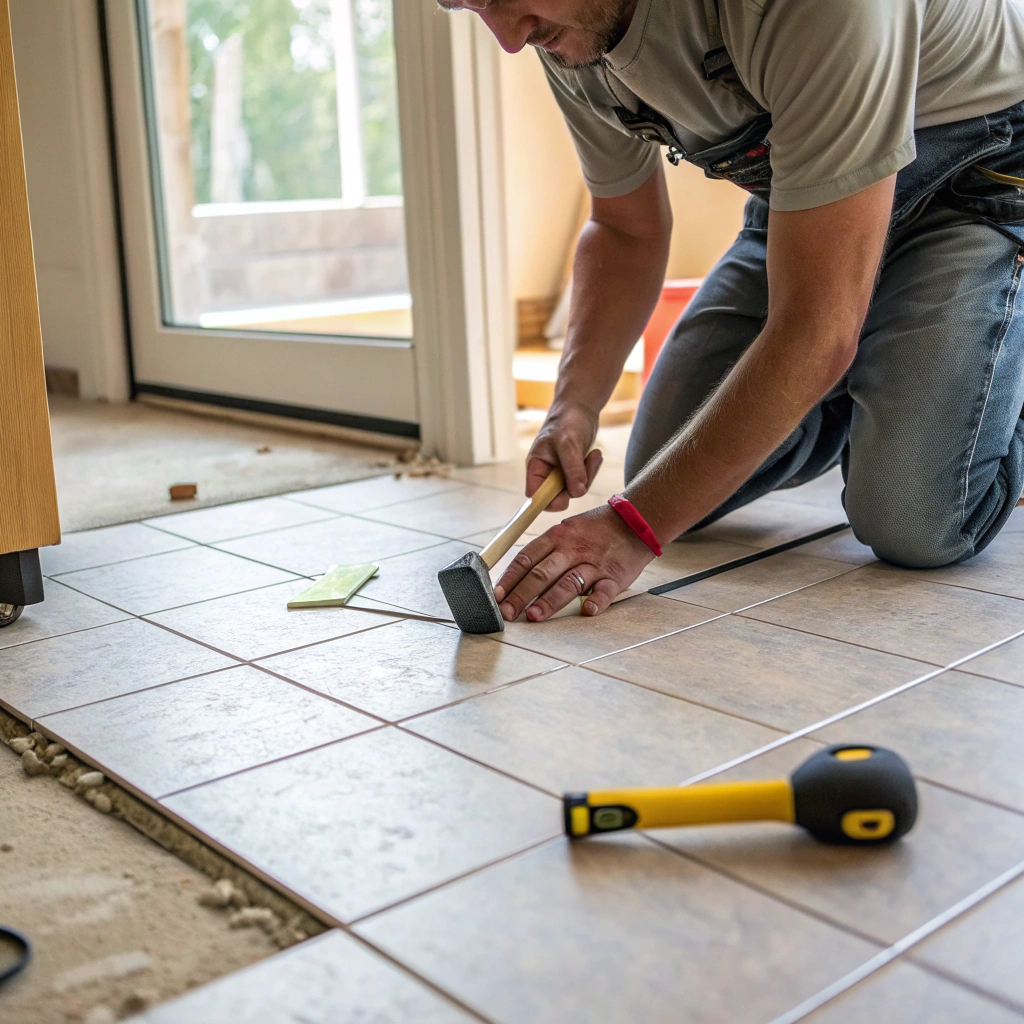
We source replacement tiles from local Newcastle suppliers, working from dimensions, finish, and any markings on the back to find the closest available match. Always worth asking first — do you have spare tiles stored from the original job?
Grout matching follows the same approach, factoring in colour, texture, and joint width. An exact match isn’t always possible on older floors, but a well-executed close match is far less noticeable than a cracked tile you’ve been stepping around for months. Where a perfect match isn’t available, we’ll tell you before we start.
Tiled Floor Repairs Across Newcastle
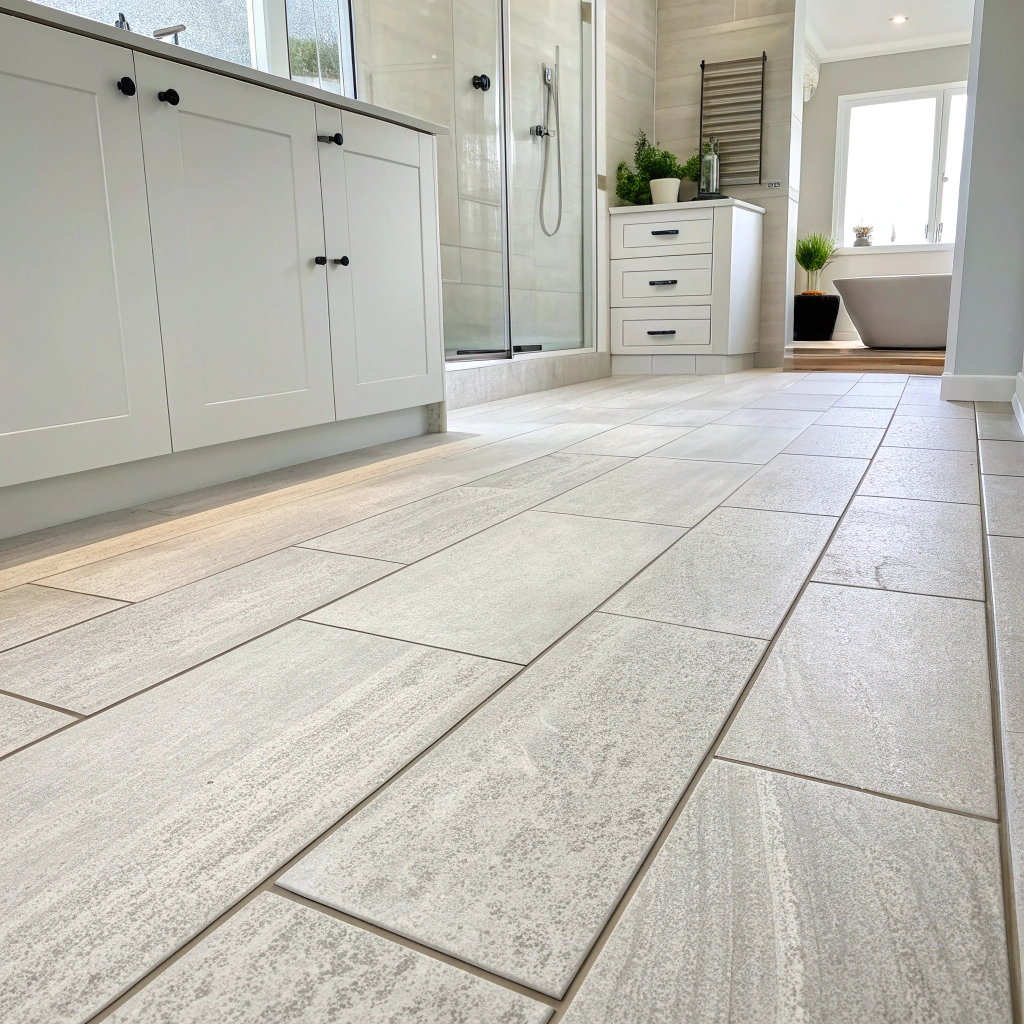
Newcastle’s housing stock is as varied as its suburbs — and we’ve worked across most of it. From post-war bungalows in Adamstown and Hamilton with original terrazzo and ceramic floors that have been down for fifty-plus years, to newer homes in Kotara and Fletcher where modern porcelain has been poorly installed over flexible subfloors, the problems change, but the process doesn’t.
We work regularly across inner Newcastle suburbs — Merewether, Cooks Hill, The Junction, Bar Beach — as well as further out through Charlestown, New Lambton, Mayfield, and Wickham. Older homes with timber subfloors, homes close to the coast dealing with persistent moisture, investment properties that need repairs done efficiently — we’ve seen the full range.
Why Newcastle Homeowners Choose Us
There’s no shortage of tilers in Newcastle. What’s harder to find is someone who’ll come out, give you a straight answer about what’s actually wrong, and fix it properly the first time.
That’s what we focus on. We don’t patch over problems and hope for the best — we find the cause, address it, and make sure the repair holds. Newcastle homes have specific challenges that come with age, coastal conditions, and older construction methods, and we know how those factors play into tiled floor failures.
We’re locally based, we work across Newcastle every week, and our reputation here matters to us. Most of our work comes from referrals and returning customers — homeowners who got a straight answer and a solid repair, and who send their neighbours our way when they’ve got the same problem.
Frequently Asked Questions — Tiled Floor Repair Newcastle
How do I know if my tile needs repair or full replacement?
We look at the extent of the damage and what’s causing it. If it’s localised — a few tiles, a section of grout — repair is almost always the right call. If the substrate has failed across a large area, replacement makes more sense. We’ll tell you which one, honestly, after we’ve assessed the floor.
How long does a tiled floor repair take?
Most repairs take a day or less. Larger jobs with multiple affected areas may take two days. We’ll give you a clear timeframe before we start.
Can you match my existing tiles?
We do our best to source the closest available match using the tile dimensions, finish, and any markings we can find. If you have leftover tiles from the original job, that’s always the best starting point — so it’s worth checking your garage or shed before we come out.
What causes tiles to keep cracking in the same spot?
Recurring cracks in the same area almost always point to movement in the substrate beneath. Replacing the tile without addressing the underlying cause means the new tile will likely crack too. We fix the cause first.
Can you repair tiled floors in older Newcastle homes?
Absolutely. A large portion of our work is in older Newcastle properties — homes with timber subfloors, thick mortar beds, and tiles that have been down for decades. We know how to work with older substrates and materials without causing further damage.
Do I need to be home during the repair?
We just need access to the area being repaired. Many of our customers head to work and leave us to it. We’ll walk you through the completed repair when we’re done.
Will the repair be noticeable?
That depends on how closely the replacement tile and grout match the existing floor. On newer floors with tiles still in production, the match is often very close. On older floors, there may be some visible difference — we’ll always set realistic expectations before we start.
Get Your Tiled Floor Assessed — No Obligation
The next step is straightforward. Call us or submit a request online, and we come out and assess your floor at no cost and give you a clear picture of what it needs. From there, we fix it properly.
- 📞 Call us today for a free on-site assessment
- 💬 Submit a quote request online
- 🔗 Not sure if it needs repair or replacement? — Visit our tile replacement page
Find a Local Bathroom Renovations Company in Newcastle
