
Accessible Bathroom Renovations in Newcastle — Safe, Stylish & Designed for Independence
There’s a moment — and if you’re reading this, you might already know exactly what it looks like — when you walk into your bathroom and realise it’s no longer working the way it should. Maybe it’s a parent gripping the towel rail just to get in the shower. Maybe it’s you, after a health change, feeling less safe in a space you’ve used your whole life without a second thought. Whatever brought you here, one thing’s clear: you need your bathroom to actually work for the people who use it.
Accessible bathroom renovations in Newcastle are about far more than compliance checklists or clinical-looking grab rails. Done properly, they’re about designing a space that gives people back their confidence, their privacy, and their independence — without sacrificing a single thing on style.
That’s exactly what we do.

Why Accessible Bathroom Renovations Matter
The bathroom is where independence lives. It’s one of the most private, most used spaces in any home — and when it stops working safely for someone, the ripple effect on their daily life and their confidence is real and immediate. This isn’t about adding a grab bar and calling it done.
What Accessible Bathroom Design Actually Involves
Most people searching for accessible bathroom renovations in Newcastle are surprised by how much thought goes into a well-designed accessible space. It’s not a different category of renovation — it’s a more considered version of every decision that goes into any bathroom renovation. Here’s what that looks like in practice.
Compliance and Accessibility Standards
Accessible bathroom renovations, particularly those being completed for someone with a disability or as part of an NDIS plan, need to meet specific building codes and standards. In Australia, that means working within the requirements of the National Construction Code and the relevant accessibility standards that govern how spaces are designed and built.
This is an area where experience matters. Knowing which standards apply, how they translate into actual design decisions, and how to document and certify compliance correctly is not something every renovator is across.
If your renovation is connected to any kind of formal support process — NDIS, aged care, or otherwise — we can provide the documentation and detail that may be required as part of that process.
Working With NDIS and Other Funding
Accessible bathroom modifications can sometimes attract partial funding through the NDIS or other support programs, depending on the individual’s plan and their specific circumstances. If you or someone in your household has an active NDIS plan, it’s worth exploring with your support coordinator or planner whether bathroom modifications fall within scope of the funding available.
We’re not able to tell you what will or won’t be covered — that depends on the individual plan, the participant’s goals, and the decisions made by the relevant planners and coordinators.
What we can tell you is that we’re familiar with how these processes work, and we can work alongside support coordinators to provide the quotes, specifications, and documentation they need to move things forward.


Why Newcastle Homeowners Trust Us With These Projects
Accessible bathroom renovations are not a side project for us — they’re work we genuinely care about and have completed across Newcastle suburbs from Hamilton and Merewether to Charlestown, Kotara, and New Lambton.
We’ve worked with families who are adapting a home for an aging parent who’s moving in. We’ve worked with homeowners who’ve had a health change and need their bathroom to function differently — and quickly. We’ve worked with couples thinking twenty years ahead who want the renovation done once, done properly, and done with longevity in mind.
What that experience has taught us is that every situation is different, and the most important thing we can do at the start of any accessible bathroom project is listen. Not assume. Not arrive with a standard checklist. Actually listen to what this particular person needs, what matters most to them, and what the bathroom has to do to make their daily life work the way they want it to.
Let's Talk — No Pressure, No Rush
If you’re thinking about an accessible bathroom renovation in Newcastle — whether for yourself, for someone you love, or for the years ahead — we’d genuinely welcome the chance to have a conversation.
There’s no obligation, no hard sell, and no pressure to decide anything quickly. A free consultation is exactly that — a chance for us to listen to your situation, understand what you actually need, and give you honest, practical guidance on what’s possible.
We know this kind of project carries real weight. We treat it that way.
Reach out when you’re ready — by phone, by form, however suits you best. We’ll take it from there at whatever pace feels right for you.
FAQs About Accessible Bathroom Renovations in Newcastle
How long does an accessible bathroom renovation typically take in Newcastle?
Most accessible bathroom renovations I complete in Newcastle take between two and three weeks from the day we start on site. It depends on the scope — a wet room conversion with widened doorways takes longer than a more straightforward grab rail and shower upgrade. I always give you a detailed timeline before we start so you’re not left guessing, especially important if you’re working around someone’s care schedule or support visits. Newcastle’s coastal humidity can occasionally slow drying times for waterproofing membranes, so I factor that into the schedule from the beginning rather than rushing it.
Can an accessible bathroom still look modern and stylish, or will it look like a hospital bathroom?
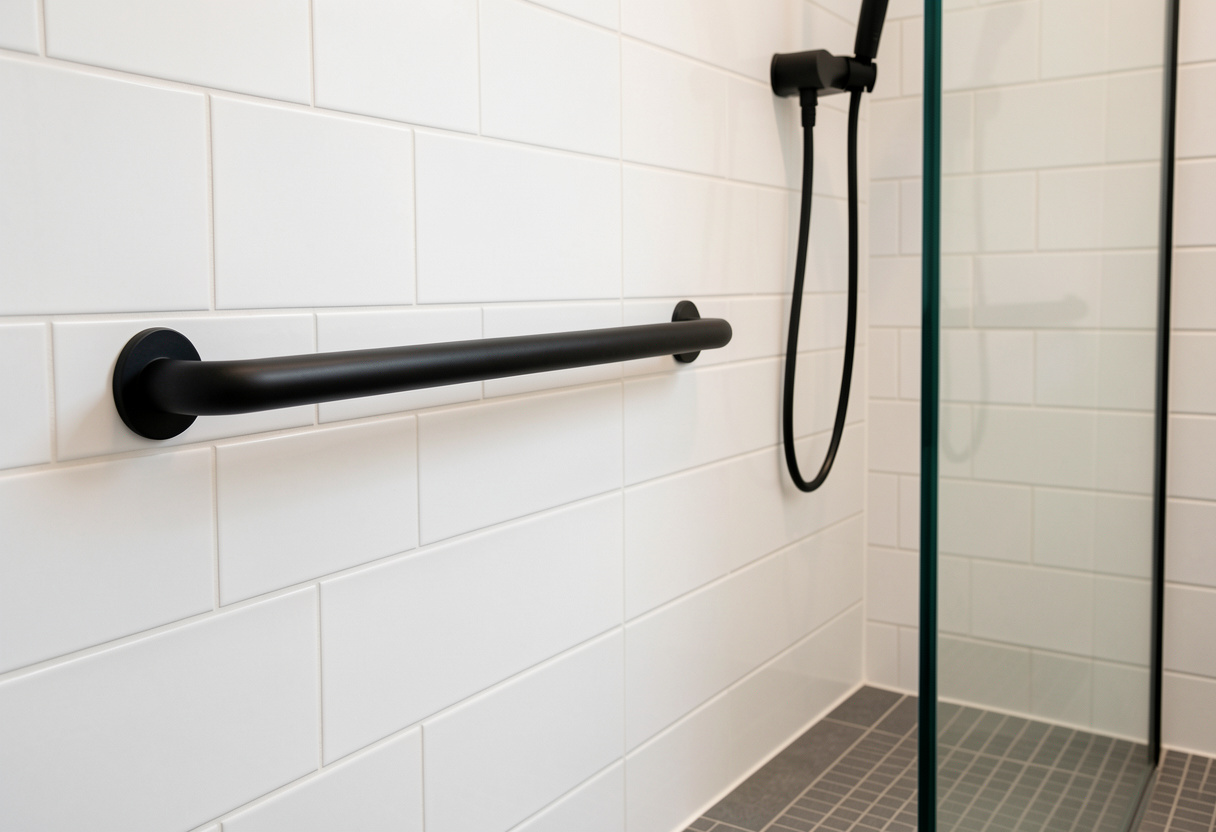
Honestly, this is the question I get asked most, and the answer is a firm no — it absolutely doesn’t have to look clinical. The accessible bathrooms I design in Newcastle use the same contemporary tiles, frameless shower screens, and quality fixtures you’d see in any high-end renovation. Grab rails now come in matte black, brushed nickel, and brushed gold finishes that look intentional and designed rather than medicinal. When it’s done right, most people who walk into the finished bathroom don’t even realise it’s been built to accessibility standards.
Do I need council approval for an accessible bathroom renovation in Newcastle?
In most cases, a standard accessible bathroom renovation in an existing Newcastle home won’t require a Development Application through Newcastle City Council. That said, if we’re widening doorways, making structural changes, or the property falls under a heritage overlay — which is common in suburbs like Cooks Hill and Hamilton — there may be additional steps involved. I assess this at the consultation stage so there are no surprises down the track. Getting the approvals right from the start protects you and makes sure the work is fully compliant.
What's the difference between an accessible bathroom and a regular bathroom renovation in terms of cost?
Accessible bathrooms do tend to cost a little more than a standard renovation because of the additional planning, specific products, and compliance requirements involved. In Newcastle, you’re generally looking at a premium of ten to twenty percent over a comparable standard renovation, depending on the features included. That said, when you factor in the NDIS funding that may be available, or the cost of not doing it right and having to retrofit changes later, the investment makes a lot of sense. I always give a transparent, itemised quote so you know exactly what you’re paying for before anything starts.
How do I know which accessible features my family member actually needs?
That’s exactly the conversation I have at the initial consultation — because there’s no one-size-fits-all answer. What someone with a hip replacement needs is very different to what someone managing a progressive neurological condition or living with low vision requires. I’ll often suggest involving an occupational therapist in the process, particularly for complex situations, because their assessment of the individual’s specific functional needs is genuinely valuable and can also support NDIS funding applications. Between my building knowledge and their clinical insight, we tend to arrive at a design that really works for the person using it.
Newcastle gets humid summers and cooler winters — does that affect the materials used in an accessible bathroom?
It absolutely does, and it’s something I think about carefully for every project in this area. The salt air and moisture that comes with living close to the coast in Newcastle puts real demands on fixtures, particularly metal fittings like grab rails and tapware. I spec marine-grade or powder-coated stainless steel for anything that’s going to be in or near the shower, and I choose grout and waterproofing systems rated for high-moisture environments. The last thing you want in an accessible bathroom is a rail that corrodes or a floor coating that loses its slip resistance within a couple of years — so I don’t cut corners on product selection here.
Find a Local Bathroom Renovations Company in Newcastle
