
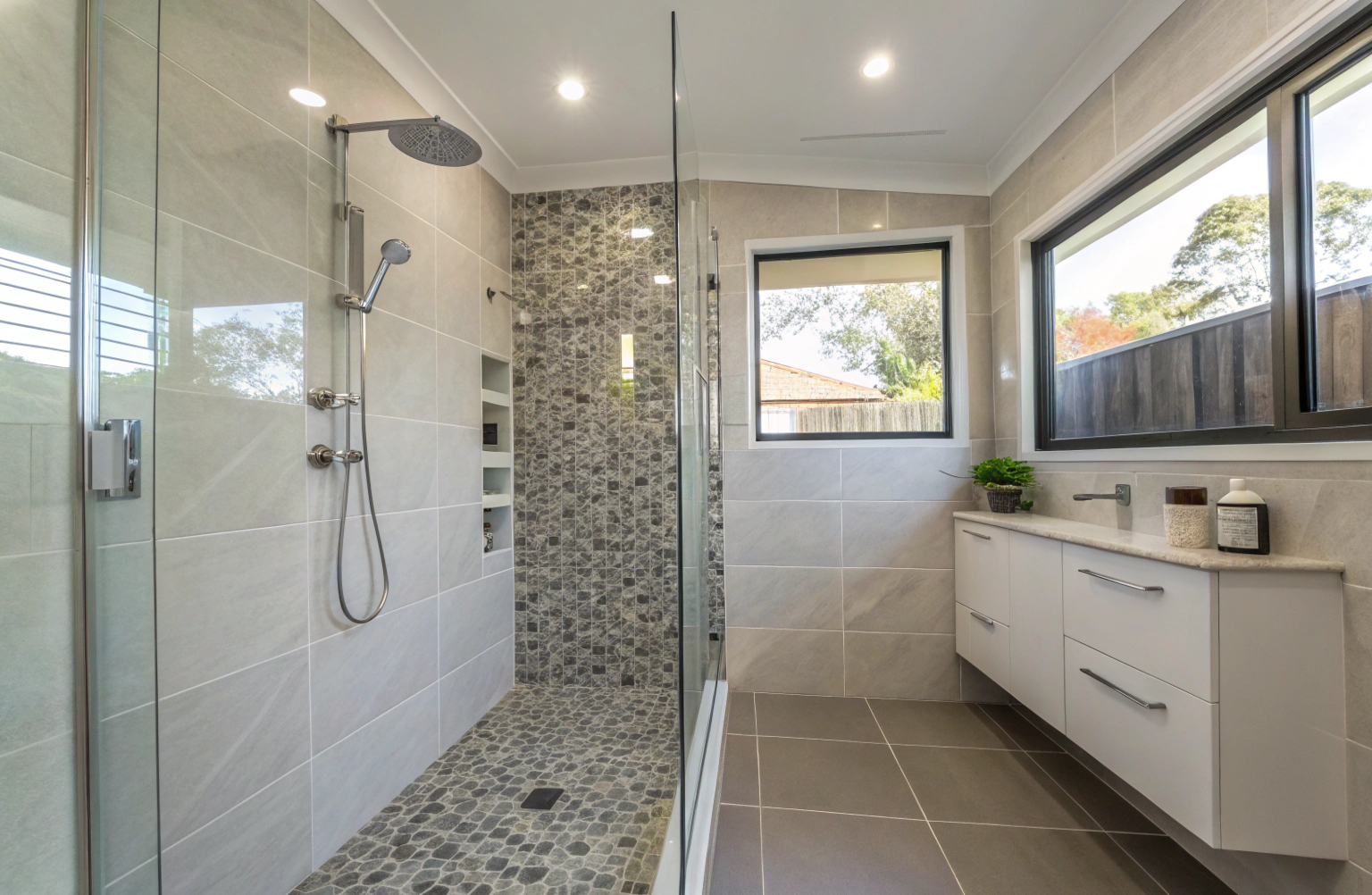
Floor Tile Replacement Newcastle — Getting It Level, Solid, and Right
Floor tile replacement comes with its own set of demands. When tiles are on the ground, they’re dealing with foot traffic, movement, weight, and in older Newcastle homes, substrates that have shifted and settled over decades. Getting a floor tile replacement right means more than just pulling out the old tiles and sticking new ones down — it means making sure what’s underneath is solid, level, and properly prepared before anything new goes in.
We check the substrate carefully before laying a single new tile. If there’s movement, soft spots, or unevenness in the base, we deal with it first. Skipping that step is what leads to tiles cracking again within months — and we’re not interested in doing a job twice. Once the base is right, new tiles go down flat, properly bonded, and correctly grouted so the finished floor feels as solid as it looks.
Floor tile replacement connects closely to our broader floor tile installation and tiled floor repair work across Newcastle.

Why Tiles Need Replacing — And Why It’s Worth Doing Right
Tiles don’t last forever, and the reasons they need replacing vary more than most people realise. Cracking and breakage are the most obvious — tiles crack from impact, from movement in the substrate beneath them, or simply from age. A cracked tile isn’t just an eyesore. Over time, it can become a genuine safety issue, particularly on floors where the broken edge catches underfoot.
Grout deterioration is another one that sneaks up on people. Grout can stain, crumble, and break down to a point where the tiles themselves look worn and tired, even when they’re structurally fine. Then there’s the style factor — tiles that made perfect sense in 1992 can make an entire room feel stuck in another era, and replacing them is one of the fastest ways to bring a space back to life.
Water damage is the most serious reason of all. Tiles that have been compromised by moisture behind or beneath them need to come out before new ones can go down safely — otherwise the problem just continues out of sight.


Matching Existing Tiles — The Trickiest Part of Any Replacement Job
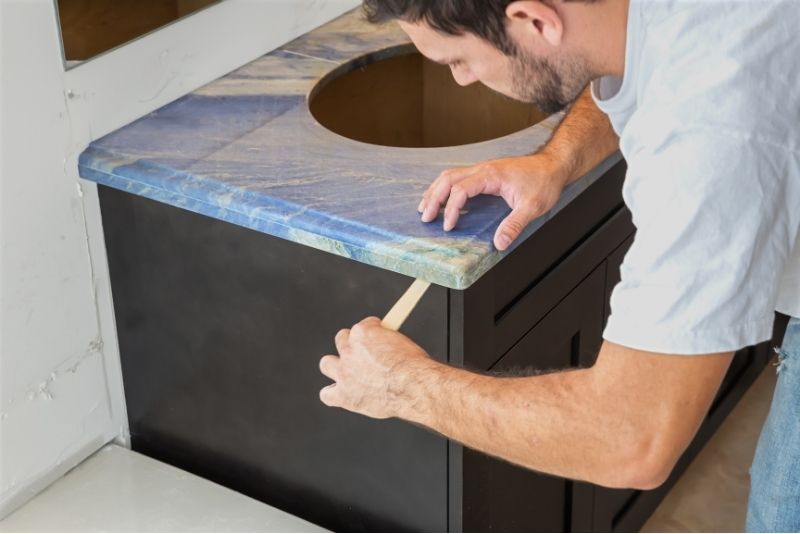
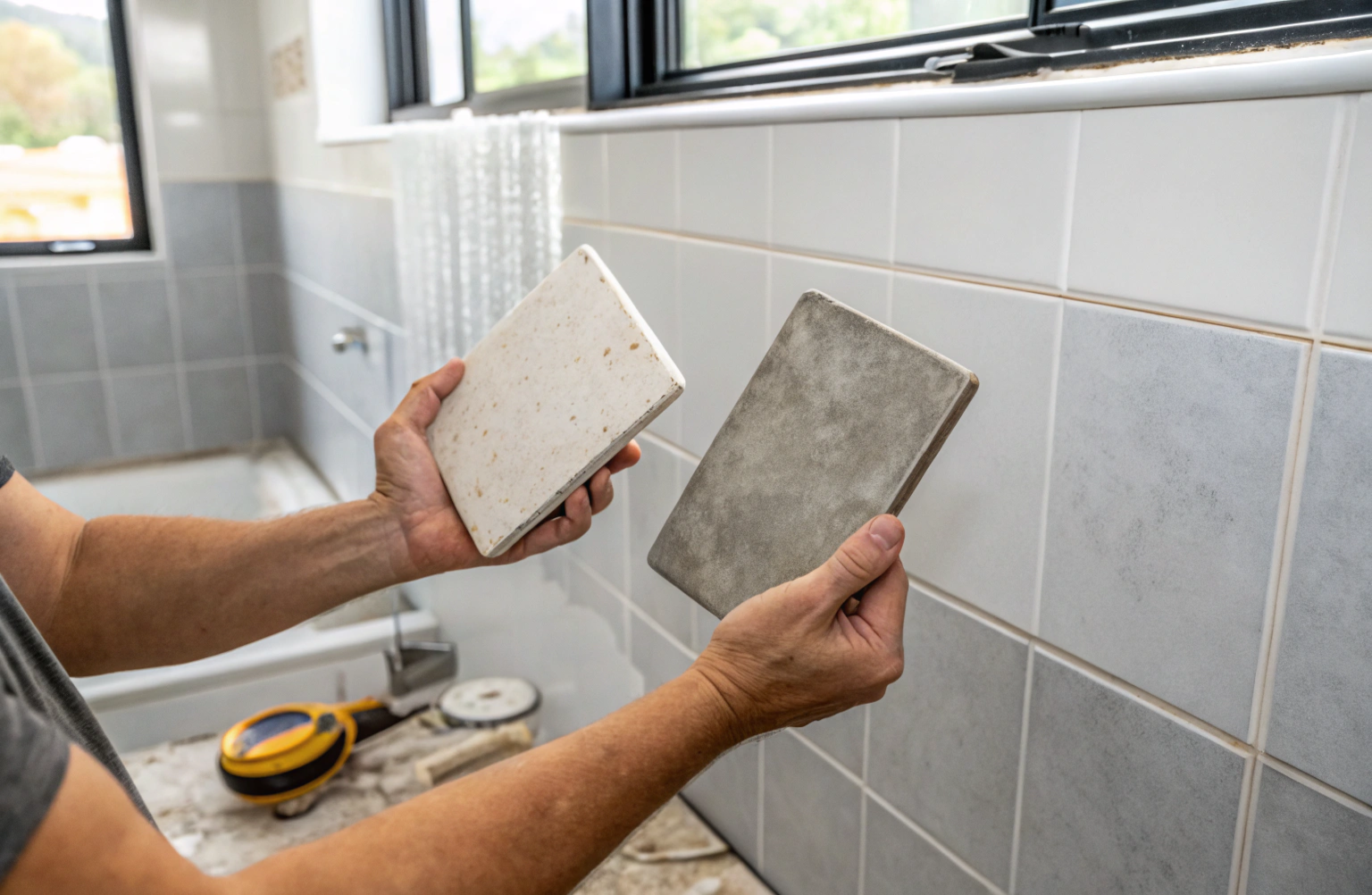
Matching existing tiles is one of the most common challenges in replacement work, and it’s worth being upfront about. Tile colours, finishes, and textures change between production runs — a tile that was manufactured eight or ten years ago might not exist in the same shade or finish today, even if the same brand still makes something similar.
When we come out to assess your tiles, we look at what’s there and give you an honest read on the matching situation. Sometimes we can source something close enough that the difference is barely noticeable once it’s grouted and sealed. Other times the match simply isn’t available, and we’ll work with you on the best path forward — whether that’s a complementary tile for the replaced section that’s been handled as a deliberate design feature, or an honest conversation about whether a full retile actually makes more sense for your situation.
What we won’t do is lay whatever’s closest and hope you don’t notice.
| Single Tile Replacement | Full Retiling |
|---|---|
| Best when damage is isolated to one tile or a small section, and the rest of the tiling is in good condition. This is the most common scenario we deal with across Newcastle homes — a cracked floor tile, a damaged section near the shower base, or a couple of wall tiles that have come loose. When the tiles can be reasonably matched and the substrate beneath is sound, single tile replacement is quick, cost-effective, and minimally disruptive. Done properly, you shouldn’t be able to tell anything was ever replaced. | Best when damage is widespread, existing tiles are significantly deteriorated, or the surface underneath has been compromised by water damage or movement. If the tiles are discontinued and matching isn’t possible, or the whole surface is simply past its best, a full retile is often the smarter long-term investment. It’s a bigger job upfront, but it gives you a fresh, consistent finish that will last. |
What’s Underneath Your Tiles — Why It Matters More Than You Think
Removing tiles doesn’t just fix what’s on the surface — it opens up what’s been hidden underneath, sometimes for years. And in older Newcastle homes, particularly, what comes off with those tiles can tell a very different story to what was visible before. Water damage, mould, substrate movement, and deteriorating adhesive are all things that can sit quietly behind and beneath tiles for a long time without being obvious from the outside.
When we pull tiles out, we always assess what’s underneath before anything new goes down. Common issues we find include:
- Water damage and moisture penetration that’s been sitting behind tiles undetected
- Mould growth on the substrate, particularly in bathrooms and wet areas
- Soft or crumbling substrate that won’t hold new tiles without repair
- Movement or unevenness in the base that would cause new tiles to crack again
Any issue we find gets dealt with properly before new tiles go in. If the area is a wet area, waterproofing gets assessed and redone where needed — we don’t tile over a problem and hand it back to you. That’s the part of tile replacement that doesn’t always get talked about, but it’s what separates a job done right from one that causes the same headaches again in two years.
Waterproofing Considerations During Tile Replacement
Waterproofing and tile replacement go hand in hand more often than people expect. When tiles come off a wet area — a shower, a bathroom floor, a laundry — the waterproofing membrane that sits beneath them gets disturbed. In some cases, it gets damaged during removal. In older Newcastle homes, there’s a reasonable chance the original waterproofing wasn’t done to the standard that’s required today, or in some cases wasn’t done properly at all.
Before new tiles go down in any wet area, we check the condition of the waterproofing underneath. If it’s been damaged, it gets repaired. If it’s deteriorated past the point of repair, it gets redone. If it was never adequate in the first place, we apply it properly before a single new tile goes in. Skipping this step is how water ends up behind walls and under floors, causing damage that’s far more expensive to deal with than the original tile replacement ever was. Newcastle’s coastal humidity makes this even less forgivable — moisture finds its way in, and the only thing standing between your walls and water damage is waterproofing done right.
Frequently Asked Questions About Tile Replacement in Newcastle
How much does tile replacement cost in Newcastle?
Cost depends on the number of tiles, the area involved, and what’s found underneath during removal. Single tile replacements are relatively straightforward. Larger sections cost more. We provide a clear written quote after assessing your specific situation on-site.
Can you replace just one or two cracked tiles without retiling the whole area?
Yes, absolutely. Single tile and small-area replacement is something we do regularly. As long as the surrounding tiles and substrate are in good condition, replacing isolated damaged tiles is a practical and cost-effective solution for most homeowners.
How hard is it to match existing tiles in an older Newcastle home?
It can be genuinely difficult. Tiles change between production runs, and older tiles may no longer be manufactured. We assess the match honestly and work with you on the best solution — whether that’s sourcing a close match or discussing alternatives.
o you need to redo the waterproofing when replacing bathroom tiles?
Often yes, particularly in wet areas like showers and bathroom floors. Removing tiles disturbs the membrane underneath. We always check the waterproofing condition before new tiles go down and redo it where needed to protect the area properly.
What happens if water damage is found underneath the tiles during removal?
We stop, assess the full extent of the damage, and deal with it properly before proceeding. Tiling over water damage isn’t something we do — it just pushes the problem further down the line and makes it worse.
Can you replace floor tiles without damaging the ones around them?
Yes, with the right tools and approach. We work carefully and deliberately through the removal process, protecting surrounding tiles throughout. Only the tiles that need to come out should come out — the rest stay undamaged.
Get a Free Tile Replacement Assessment in Newcastle Today
If you’ve got tiles that need replacing — whether it’s one cracked tile or an entire surface that’s seen better days — we’re straightforward to deal with. Reach out, we’ll come and have a look, and we’ll give you an honest assessment of what needs to happen and what it’s going to cost. No obligation, no pressure, just a clear picture of where things are at and the best way forward.
Here’s what you get when you reach out:
- Free on-site assessment of the tiles and the surface beneath them
- Honest advice on whether partial replacement or full retiling makes more sense
- Clear, written quote with no hidden costs added on later
- Straight answers on tile matching and what’s realistic for your situation
- A defined plan so you know exactly what the job involves before any work begins
Give us a call or send an enquiry today — we’ll get out to you, take a proper look, and take it from there.
Find a Local Bathroom Renovations Company in Newcastle
