
What Is Wet Area Waterproofing?
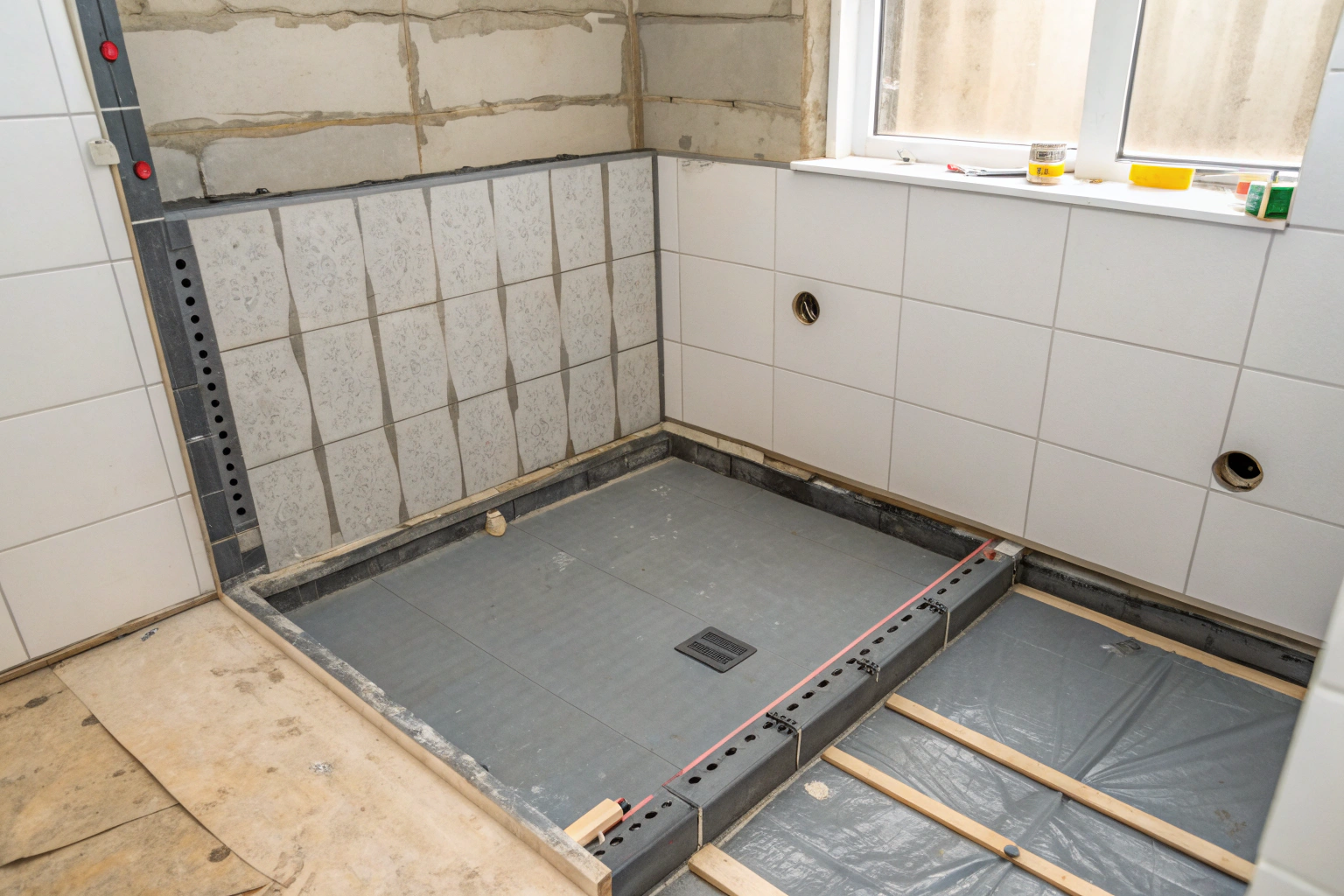
Wet area waterproofing is applying a protective membrane to any surface where water is regularly present — bathrooms, showers, laundries, outdoor entertaining areas — to stop water getting into the building structure beneath.
Done correctly, wet area waterproofing:
- Stops water from reaching substrates, framing, and structural materials
- Prevents mould, mildew, and long-term moisture damage
- Protects wall-floor junctions, corners, and penetration points where leaks most commonly start
- Meets AS 3740 — the Australian Standard for waterproofing in wet areas
- Covers all surfaces with water exposure, not just the shower recess
In Newcastle’s coastal climate, humidity and salt air speed up moisture damage faster than most people realise. Properly applied wet area waterproofing isn’t optional — it’s the foundation every wet space in your home needs.

What Happens When Wet Area Waterproofing Fails
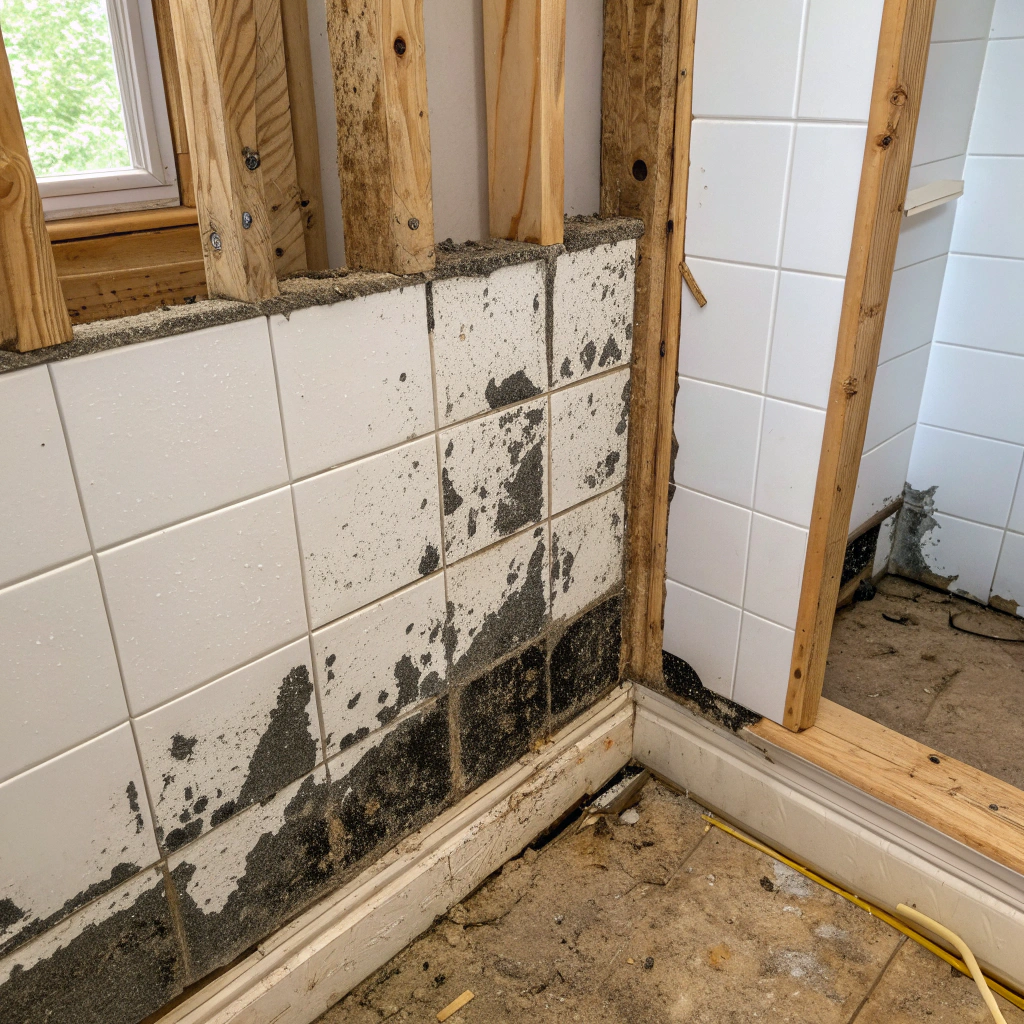
The worst part about waterproofing failure is that you usually can’t see it happening.
Water gets through a gap — an unsealed joint, a corner not properly covered, a membrane applied too thin. It sits inside the wall, under the floor, behind the tiles. By the time you notice soft spots, cracking grout, or a musty smell, the damage underneath is already significant.
In Newcastle, that timeline moves faster. Higher humidity means moisture doesn’t dry out between uses. Salt air accelerates deterioration. What takes five years to surface in a drier climate can show up in two or three years here.
Fixing failed waterproofing always costs more than doing it right the first time — tiles up, linings off, framing replaced. AS 3740 exists to prevent exactly that.
The Waterproofing Demands of Each Wet Area Type
Not every wet area is the same. Each space has different water exposure, different risk points, and different membrane requirements.
Shower Recesses: The highest water volume, the most frequent use, and the most demanding environment in any home. Full membrane coverage across every surface — floor, walls, junctions, and penetration points — is non-negotiable.
Bathrooms: Beyond the shower, humidity and splash zones across the full floor and lower walls need proper coverage. The shower recess alone isn’t enough.
Laundries: Washing machines, overflows, sinks, and floor drains all create regular water contact. Low traffic doesn’t mean low risk.
Outdoor Wet Areas: UV exposure, drainage requirements, and temperature movement create different demands. Entertaining spaces with sinks or hose connections need membranes rated for outdoor conditions.
Commercial and Utility Spaces: High-traffic environments with continuous water exposure need heavy-duty membrane systems and stricter compliance requirements than standard residential wet areas.
How Wet Area Waterproofing Is Done
Good waterproofing isn’t just about the membrane — it’s everything that happens before and after it goes on.
Assessment and Planning: We identify every surface that needs coverage, check for any existing waterproofing, and plan the right membrane approach for the specific environment and conditions.
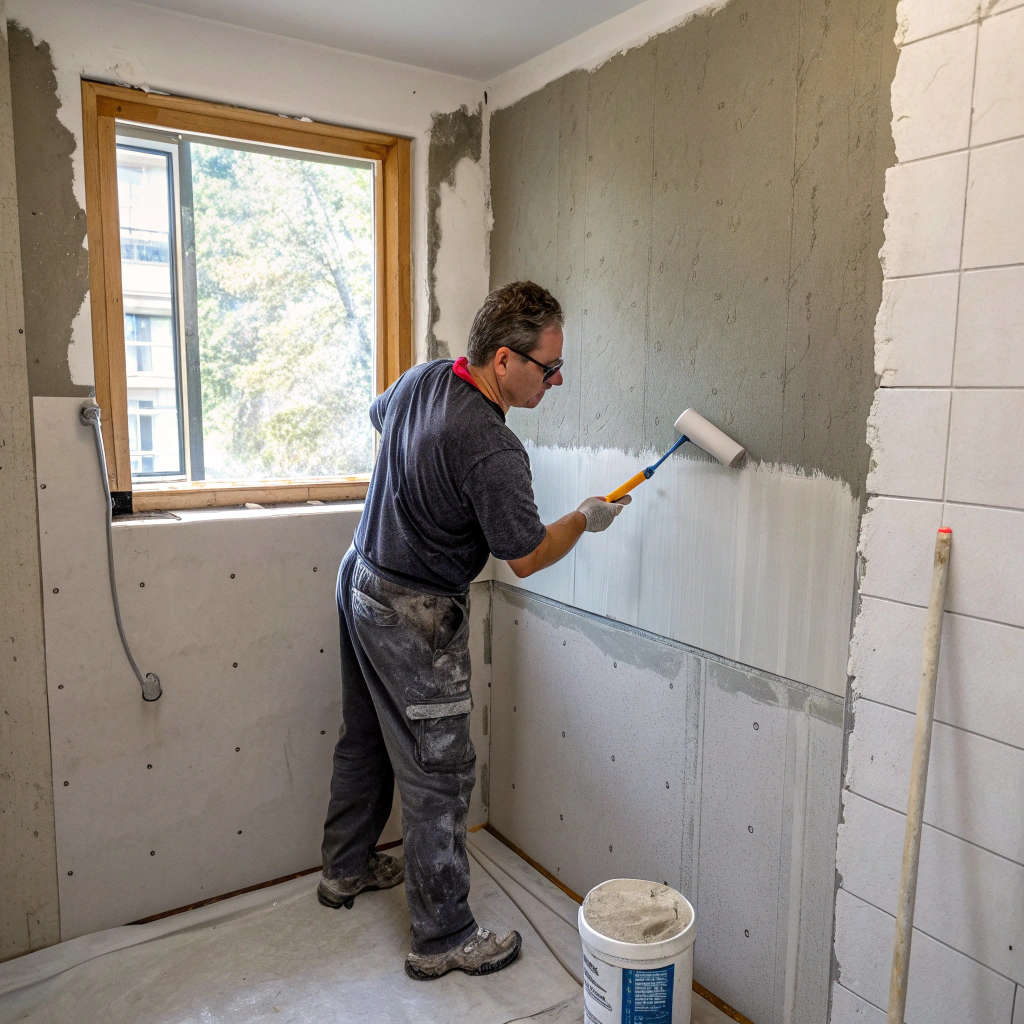
Surface Preparation: Surfaces are cleaned, any damage repaired, and primer applied where needed. What goes underneath the membrane matters just as much as the membrane itself.
Membrane Application: Full coverage across joints, corners, penetration points, and all surfaces with water exposure. These are the spots where waterproofing most commonly fails — and where we pay closest attention.
Testing and Sign-Off: Flood testing is carried out before any tiling starts. If it doesn’t pass, it doesn’t proceed. Every job is signed off on AS 3740 before the next trade comes in.
Choosing the Right Waterproofing Membrane
There’s no single membrane that works for every wet area — and anyone who tells you otherwise is cutting corners.
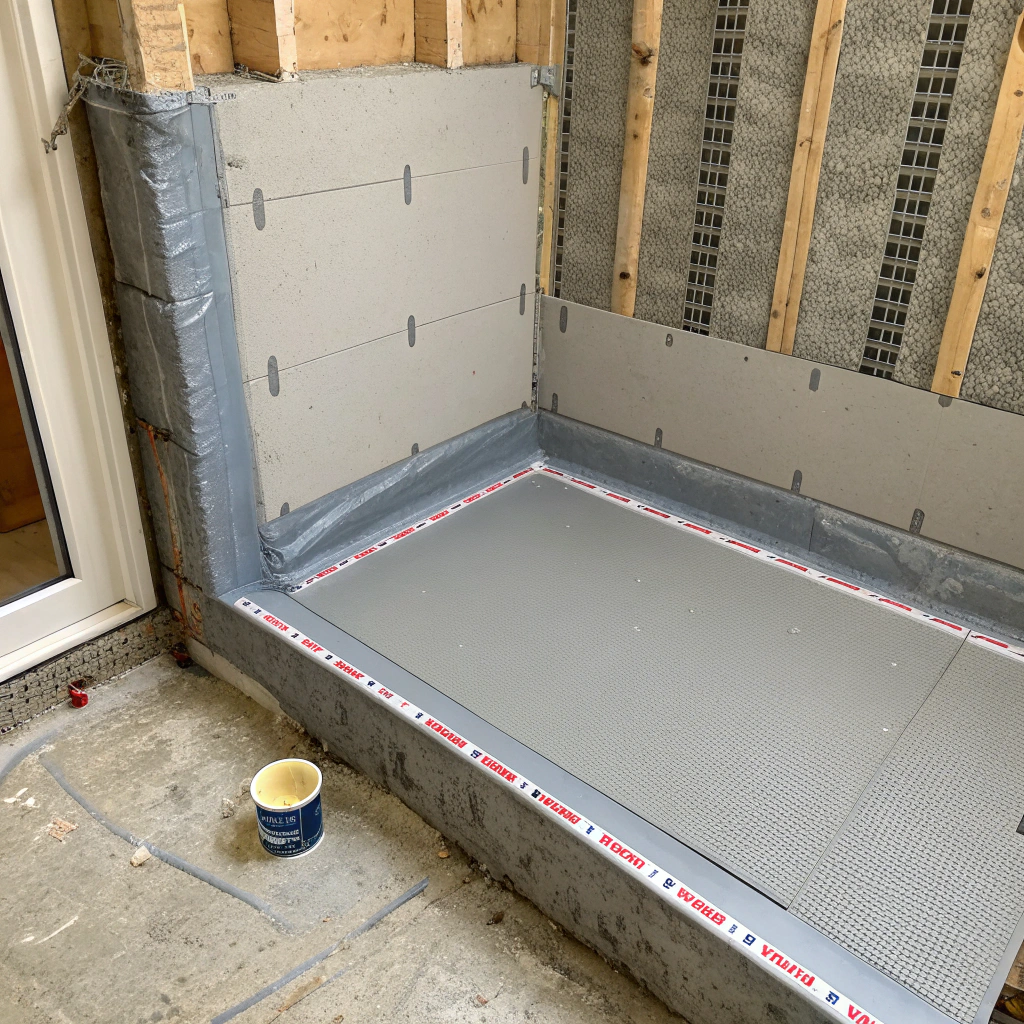
The two main types are liquid-applied membranes and sheet membranes. Each has its place:
- Liquid-applied membranes — flexible, ideal for complex layouts with lots of corners, junctions, and penetration points. Bonds directly to the substrate and covers irregular surfaces cleanly.
- Sheet membranes — better suited to large, flat surfaces where consistent thickness and fast application matter.
Which one is right depends on the space — its size, layout, water exposure level, and the specific conditions it faces. A coastal Newcastle property dealing with salt air and high humidity has different requirements than a standard inland home.
We select membranes based on what each job actually needs, not what’s cheapest or fastest to apply. The quality of the product matters just as much as how it’s put on.
Australian Standards and Compliance
Every wet area waterproofing job in Australia must meet AS 3740 — the national standard that sets out exactly how waterproofing must be done.
AS 3740 covers:
- Which areas must be waterproofed
- How far must membranes extend up walls and across floors
- How corners, junctions, and penetration points must be treated
- What the finished application must meet before tiling can start
This matters for renovations, new builds, and insurance. If waterproofing isn’t done to AS 3740, you may have no coverage if water damage occurs — and no recourse if the work fails.
Every job we do is fully compliant with AS 3740. We document our work, carry out flood testing before tiling proceeds, and sign off on each stage properly.
Wet Area Waterproofing Across Newcastle
We work across Newcastle and the surrounding suburbs — older brick and weatherboard homes in Hamilton, Merewether, Cooks Hill, and The Junction, through to newer builds in Kotara, Charlestown, and New Lambton.
Newcastle properties come with their own set of challenges. Older homes built before waterproofing standards were properly enforced often have no membrane at all — or one that’s well past its useful life. Coastal humidity means moisture problems develop faster here than almost anywhere else in NSW. Salt air works into surfaces and accelerates the kind of deterioration that failed waterproofing can’t stop.
We’ve worked on every type of wet area Newcastle properties throw at us — single bathrooms in post-war bungalows, full laundry and bathroom combinations in family homes, outdoor entertaining areas two streets from the beach, and commercial amenities across the region.
If you’re renovating, building new, or dealing with a wet area that’s already showing signs of failure, we’re the local team that knows Newcastle conditions and gets the job done to standard.
Frequently Asked Questions About Wet Area Waterproofing in Newcastle
A properly applied membrane done to AS 3740 should last the life of the installation. The most common reason we see waterproofing fail early is poor application — not the membrane itself. When we do a job, we do it to last.
Yes — and this is one of the most common mistakes we see. If tiles are coming off, we always inspect the existing membrane before anything new goes on. Tiling over failed waterproofing just buries the problem. We won’t do it, and we’d strongly advise against anyone who will.
For most residential wet areas, we typically allow one to two days for membrane application, plus the required drying time before tiling can start. We’ll give you a clear timeline upfront so you can plan around it.
Yes. We carry out flood testing on every job before tiling proceeds, and we sign off all work to AS 3740. This protects you for council inspections, building certifiers, and insurance purposes — and gives you documented proof the job was done properly.
Liquid-applied membranes are flexible and ideal for complex layouts with lots of corners and penetration points. Sheet membranes work better on large flat surfaces. We assess each job individually and select the membrane that suits the specific space and conditions — we don’t use a one-size-fits-all approach.
Soft spots underfoot, cracking or lifting tiles, grout that keeps deteriorating, persistent mould, or a musty smell that won’t go away are all signs we take seriously. If you’re noticing any of these, we’d recommend getting your wet area assessed before the damage goes further.
Ready to Get Your Wet Area Protected Properly?
Water damage doesn’t wait — and in Newcastle’s coastal climate, it moves faster than most people expect.
Whether you’re renovating, building new, or dealing with a wet area that’s already showing signs of failure, we’re ready to help. We’ll inspect your space, advise on exactly what’s needed, and provide a written quote with no surprises.
No obligation. No pressure. Just honest advice from a local Newcastle team that knows what these properties need.
Get a Free Wet Area Assessment Today
Call us directly or fill in the quote form below — we’ll get back to you fast.
📞 0240036435
Servicing Hamilton, Merewether, Cooks Hill, The Junction, Adamstown, Kotara, Charlestown, New Lambton, and the surrounding Newcastle suburbs.
Find a Local Bathroom Renovations Company in Newcastle
